The Venice Art Biennale 2024 has opened to the public and will be open until November 24, 2024. We at The PhotoPhore visited it for you during the preview.
Foreigners Everywhere: Our Incursion into the Biennale Arte 2024
The 60th International Art Exhibition of Venice, curated by Adriano Pedrosa, is configured not only as an exhibition showcase but as an authentic programmatic manifesto. Pedrosa, the first curator from the Global South to lead the Biennale and already known for his innovative direction at MASP in São Paulo, has infused the Lagoon with a decolonial and inclusive perspective.
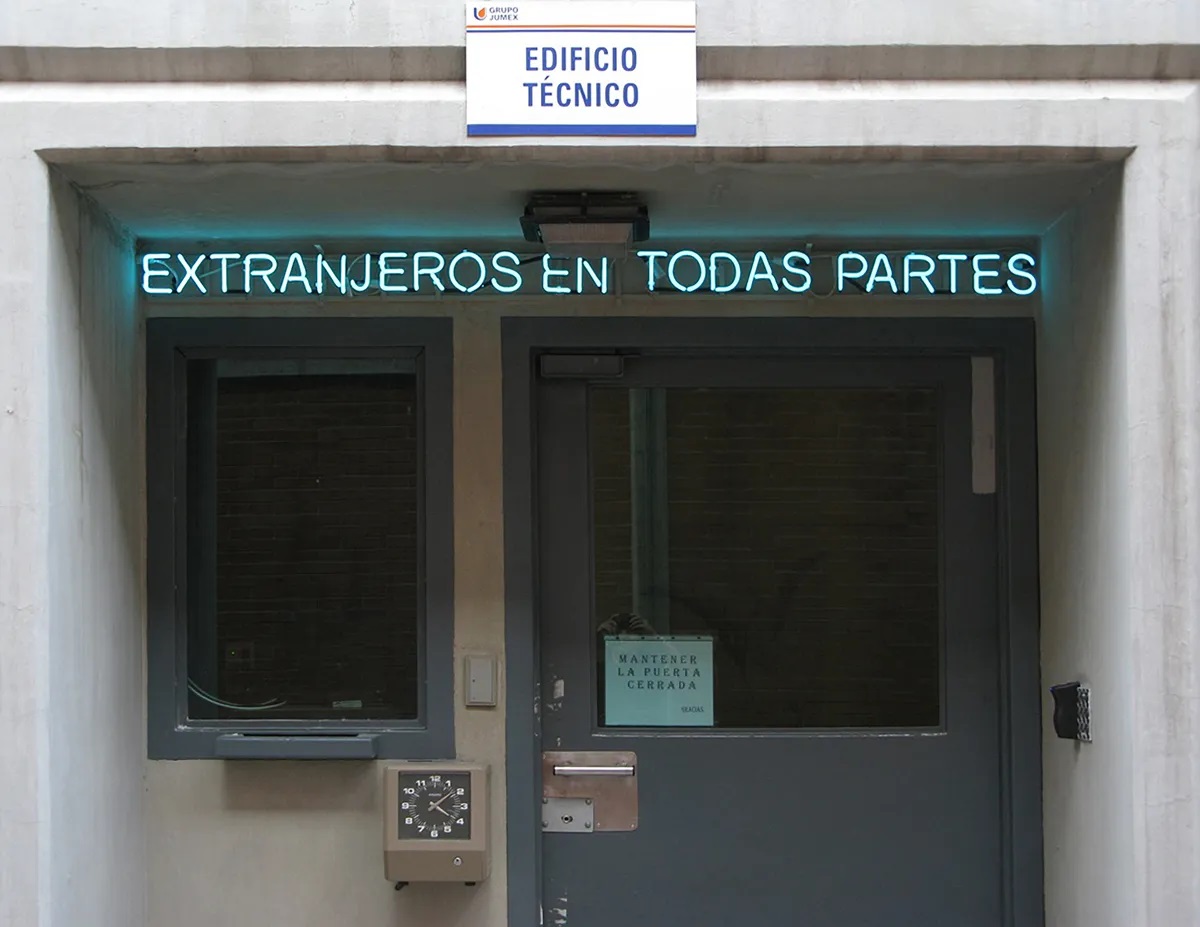
The title, Stranieri Ovunque – Foreigners Everywhere, transcends the political chronicle of migration to become an ontological investigation into identity, into feeling like a foreigner within one’s own body or in relation to the canons that constitute a given society and culture. Our expectations, as well as our admiration for Pedrosa, were very high and have been well rewarded: Pedrosa’s challenge – integrating the vision of the “Global South” into the heart of Western artistic institutions – translates into an exhibition path that systematically dismantles the canons of classical historiography. As a guiding principle, the Biennale Arte 2024 has prioritized artists who have never participated in the International Exhibition (in the central exhibitions at the Giardini and the Arsenale, curated by previous curators).
Giardini: Between Indigenous Mythologies and New Modernism
The entrance to the Giardini is marked by the chromatic impact of the Central Pavilion, whose facade has been entirely covered by a monumental mural by the Brazilian collective MAHKU (Movimento dos Artistas Huni Kuin). The work, titled Kapewë Pukeni (2024), narrates the myth of the passage between continents (Asia and America via the Bering Strait) on the back of the alligator-bridge, visually signaling the suspension of Western aesthetic hegemony in favor of an indigenous cosmogony.
Inside the international exhibition, we were struck by two key figures in the dialogue between “outsiders” and the contemporary:
- Madge Gill: The British artist, a historical exponent of Art Brut, arrives at the Biennale (for the first time) with her visionary graphic works. Drawings such as the hypnotic Crucifixion of the Soul (1936) testify to a prolific production created in a trance state, guided by the spirit “Myrninerest.” The density of her ink strokes creates a spiritual texture that challenges the visitor’s perception.
- Louis Fratino: Fratino’s canvases represent a formal elevation of everyday queer experience. Through a pictorial language that dialogues with 20th-century modernism (from Picasso to Léger), the artist documents domestic intimacy and desire with a chromatic sensitivity and compositional delicacy that ennoble the vulnerability of bodies. His works are also exhibited for the first time at the Biennale Arte.
Among the National Pavilions, our personal selection focuses on three projects:
- Germany (Thresholds): The pavilion, curated by Cagla Ilk, hosts artists Yael Bartana and Ersan Mondtag. A powerful reflection on memory and belonging that challenges the physical boundaries of the pavilion itself (with part of the program hosted on the Isola della Certosa). Bartana’s video and sculptural installation, Light to the Nations, tells of humanity’s utopian journey toward distant galaxies to escape a planet Earth on the brink of environmental and political destruction. Mondtag’s work, titled Monument eines unbekannten Menschen (Monument to an Unknown Person), is an installation made of dust and debris that preserves the story of an anonymous worker (inspired by the artist’s grandfather, who arrived in Germany from Turkey as a Gastarbeiter, one of the migrant workers who moved to West Germany between 1955 and 1973, seeking work as part of a formal guest worker program), celebrating the life of one who remained on the margins of official History despite having contributed to building the country’s prosperity.
- France (Attila cataracte ta source aux pieds des pitons verts finira dans l’abîme mer totale avec ce que nous avons de récifs en noi): Artist Julien Creuzet transforms the pavilion into an immersive ecosystem. Through textile sculptures reminiscent of fishing nets and ocean debris, accompanied by a polyphonic soundscape, Creuzet evokes Caribbean imagery and the roots of Martinique, fusing technology and organic forms.
- Egypt (Drama 1882): Wael Shawky presents a monumental video-operatic work that reinterprets the Urabi revolt against colonial rule in 1882. Through meticulous theatrical staging, Shawky analyzes the mechanisms of historical narrative and power, using musical composition as a tool for political critique.
Arsenale: The Rediscovery of the Display and Diffused Modernism
Part of the Arsenale stands out for a high-profile architectural curatorial choice: the adoption of the display system designed by Lina Bo Bardi. Seeing the works suspended on the famous glass and concrete easels (originally created for MASP) allows for an experience of extreme lightness, direct and almost physical, in which the dialogue between the work and the industrial space of the Arsenale suffers no wall-mediated interference. For us lovers of architecture and design, this tribute by Pedrosa to Bo Bardi is alone worth the visit to the show.
Among the artists selected for the central exhibition of the Arsenale, narratives of resistance and formal redefinition emerge:
- Omar Mismar: With his series of mosaics, Mismar operates a crasis between the millenary Syrian artisanal tradition and the urgency of contemporary war tragedy. By inserting elements of queer and pop aesthetics into a historically celebratory medium, the artist denounces the invisibility of pain and the persistence of beauty.
- La Chola Poblete: The Argentine artist presents large-scale installations and watercolors that explore colonial legacy through a transfeminist and indigenous lens. Her work is a critical assemblage of religious symbolism and popular culture.
- Salman Toor: Toor’s canvases, populated by lithe figures in nocturnal environments saturated with emerald green, offer a glimpse into “queer-brown” life. His painting captures moments of conviviality and vulnerability, describing the negotiation of identity in the context of the global diaspora.
Concluding Considerations
The operation led by Adriano Pedrosa is of fundamental historiographical importance. The primary merit lies in having given a voice to talents systematically ignored by the Eurocentric canon, proposing an illuminating focus on the Modernism of the Global South. We greatly appreciated the 360-degree analysis of the concept of the “foreigner”: here it is not only about those who cross geographical borders, but also the queer artist, the folk artist, and the self-taught artist, all equally recognized as protagonists.
From a critical perspective, a certain general caution could be noted. While the reparative intent toward the past is noble and fully achieved, knowing Pedrosa’s radical and innovative approach, we would have expected a pinch more audacity in looking toward the future and almost “foretelling” movements and themes of which we are not yet aware. Nevertheless, the 60th Venice Biennale remains an unmissable event.
Pic. 1: Claire Fontaine, Foreigners Everywhere – Spanish, 2007. Installation view “The Traveling Show,” curated by Adriano Pedrosa, La Colección Jumex, Mexico. PHOTO STUDIO CLAIRE FONTAINE / © STUDIO CLAIRE FONTAINE / COURTESY CLAIRE FONTAINE AND MENNOUR, PARIS
M. C. Denora & D. Fallacara


