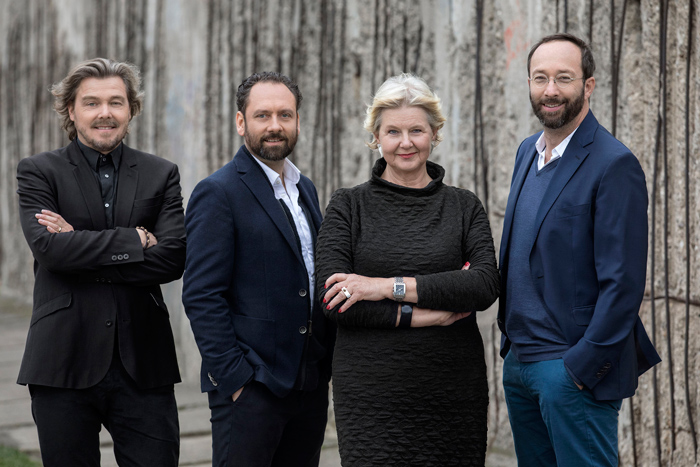
The German Pavilion at the 16th International Architecture Exhibition of La Biennale di Venezia is entitled: Unbuilding Walls.
The project, curated by GRAFT (Lars Krückeberg, Thomas Willemeit and Wolfram Putz) and Marianne Birthle, starts from the anniversary, this year, of the 28th year in which Germany is once again united.
28 is exactly the same number of years during which the Berlin Wall had existed.
The project of the exhibition at the German Pavilion, therefore, is based precisely on the concept of “division” and “union“, symbolized by the construction and then by the destruction of the Berlin Wall.
That’s the starting point of the re-elaboration of the main theme of the Bienniale 2018: FREESPACE.
There was a huge kind of “free space“, indeed, in the heart of the German capital, at the fall of the wall. A large space to use as much as possible for the population.
So, it seems logical to start from Berlin. One of the most famous spaces linked to the Wall, in the center of the city, is the Checkpoint Charlie.
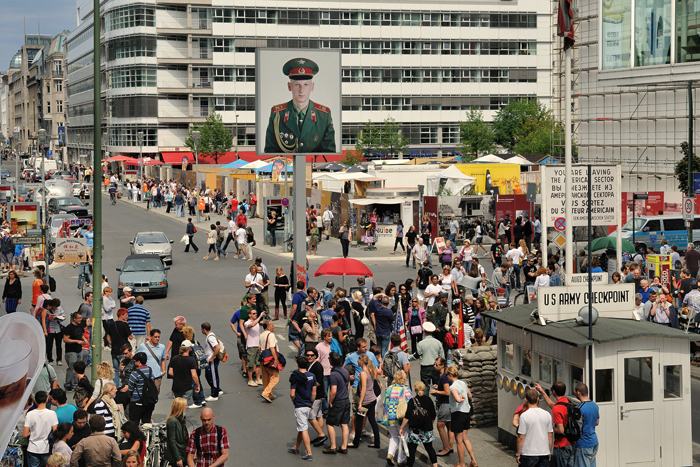
The Checkpoint Charlie was one of the three crossing points between the “two cities” in which Berlin was divided, and it was used by diplomats and people traveling from West to East Berlin.
Located near the Brandenburg Gate, it became one of the most symbolically potent image of the Cold War and of the divided city.
At the fall of the wall, an empty urban space extending across this huge “free space” has been partially filled with buildings, but it still remains one of the aggregation points (especially for tourists) of the city.
In the German pavilion, the project for a new vision for the location of Checkpoint Charlie will be presented. As a result of a competition, the project will transform that part of the city to make it even more open to the population and that will include at the Museum of the Cold War, that will be run by the State of Berlin.
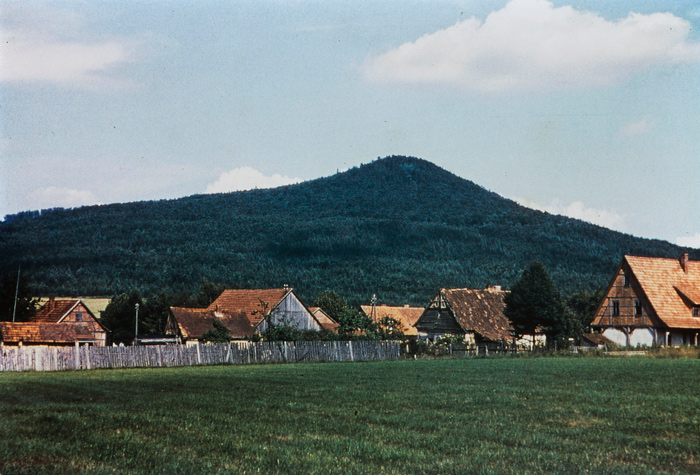
From Berlin, the exhibition moves on to the former Eastern Germany, where a brutal way of getting “free space” will be analyzed.
Between 1953 and 1961, about 11,000 people were evicted from the Socialist Unity Party (SED) because they were considered “not loyal to the party line” and “politically unreliable“.
Some towns, like Jahrsau and Lankow, that had existed since the Middle Ages, have been emptied of their inhabitants and then completely razed to the ground.
After reunification, only a few of the old inhabitants have returned to former villages, and there are still more than fifty deserted villages.
This huge “free space” is the sign of an historic moment of great political and social difficulty, and today the time has come to give these places a new possibility, a new life.
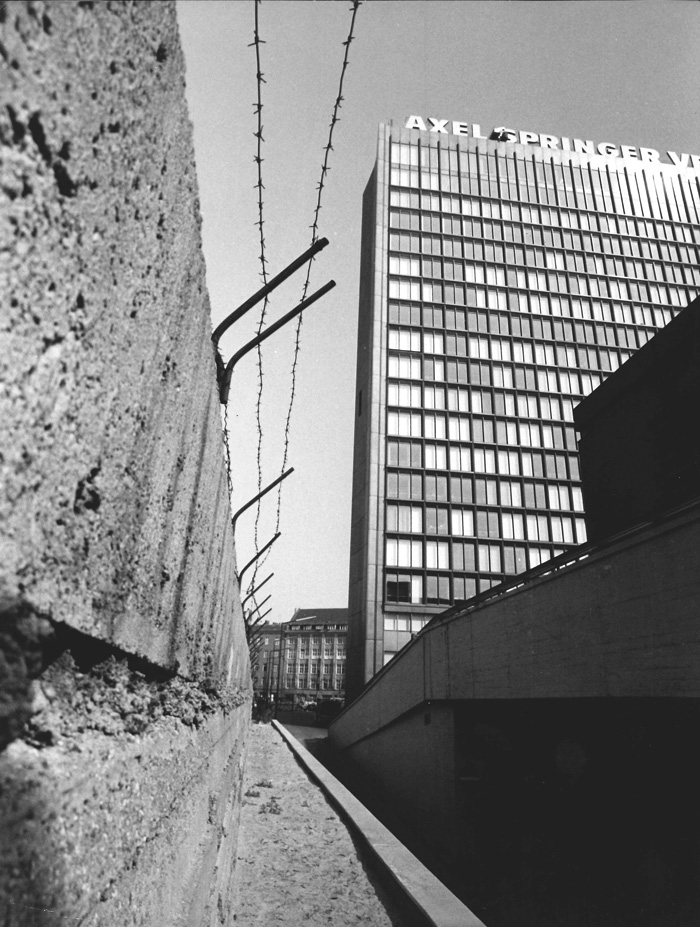
From the outskirts, the exhibition returns then back to the center, to Berlin. Back to the wall, to the former “dead spaces” of the city, which are instead returning to life. From “death space“ to “free space“.
In the area between the districts of Kreuzburg and Mitte is under construction the new campus building for Axel Springer, designed by OMA. The project is realized by Rem Koolhaas, an internationaly renowed architect, well nown in Venice because he was the director of the Architecture Venice Biennale in 2014, titled “Fundamentals“, and for the design of the renovation of the “Fondaco dei Tedeschi” (a venetian historical building, once owned by German merchants: its name, in fact, is something like “The German Storehouse”, such a coincidence!).
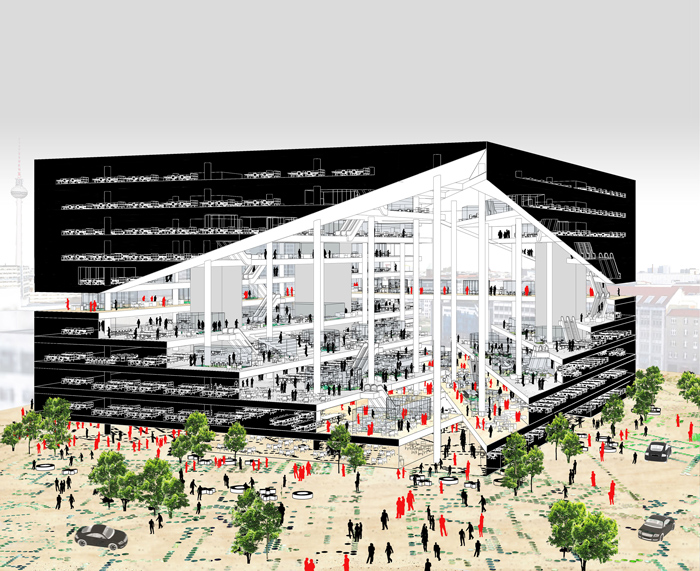
For the Berlin campus, Rem Koolhaas designed a compact building, “opened” with 30-meter-high atrium. This great terraced space, will provide the space for 3,500 members of the campus’ staff, and will face the city, having a great connection with the urban surroundings. It will include also exhibition areas and restaurants.
This “symbolic” but also “concrete” architectural gesture, will show how to give new life to the former “dead space“, heritage of a past division. It will be a tangible example of how, through architecture, we can give new value to the concept of “free space“: no more “empty space“, but new space for the community.
GERMAN PAVILION
16th International Architecture Exhibition
La Biennale di Venezia
26.05 – 25.11.2018
Biennale Gardens
Castello, 30122
30124 Venice
Italy
Text by Domenico Fallacara | the PhotoPhore
Discover: www.unbuildingwalls.de


